cebuzone
Hiker standing on a rocky peak overlooking the unique limestone hills of Osmeña Peak.

Cebu by Region

A guide arranged the way a trip is: by where things are.

Cebu is a long, narrow island in the central Philippines, and it packs an unusual amount into one province: a 400-year-old city centre in Cebu City, white-sand beaches and beach resorts less than an hour from an international airport, canyoneering and waterfalls in the south, whale sharks off Oslob, and island escapes north to Bantayan and Malapascua. The places are spread across a long island, and where you stay shapes what you can realistically see in a day. Explore Cebu from north to south below, with every place we have written up accompanied by photos, directions, and what to expect when you get there.

Know what kind of trip you want first?Browse Cebu by category

Chapter 01

Cebu City

Where the island begins, and where most people forget to stop.

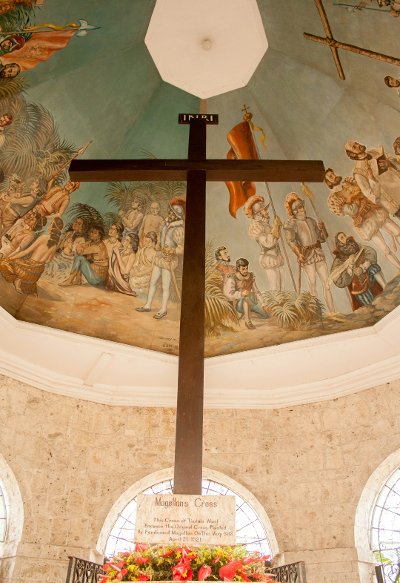
The exterior of the Magellan's Cross pavilion in Cebu, featuring an octagonal stone structure with arched openings and a red-tiled roof under a clear blue sky.

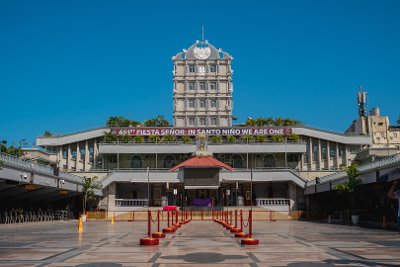
Most journeys through Cebu begin here, and most treat the city as a doorway rather than a destination. Downtown rewards anyone who slows down for it: a heritage district of historic churches, a Spanish fort and ancestral houses, markets still doing the job they were built for — all within a short ride of one another.

Head up toward Busay and the air cools, the traffic thins, and the road opens onto hillside viewpoints and restaurants looking back over the strait. The airport sits a bridge away on Mactan, which makes the city an easy first or last night. It holds enough to justify a day of its own.

Further reading Cebu Itinerary: How to Plan 3, 5, or 7 Days How to plan a Cebu itinerary — what fits in 3, 5, or 7 days, which trips pair together, and how long each day trip really takes. Read Further reading 3 Days in Cebu: A First-Timer's Itinerary A 3-day Cebu itinerary for first-time visitors: the city heritage loop, one southern day trip, and a beach day on Mactan, with realistic drive times. Read

Chapter 02

Mactan

The island the airport sits on, and the fastest way to water.

White wicker loungers along an infinity pool overlooking calm ocean and distant mountains.

Mactan is an island in its own right, joined to the mainland by two bridges and home to Cebu's international airport. It holds the densest cluster of beach resorts on the island, dive operators working the reefs offshore, and boats leaving for the sandbars nearby.

Most of it sits within about an hour of the terminal, which makes it the natural bookend to a trip — an afternoon to shake off the flight, or a last one before it. Stay longer than that and the diving is the reason to stay.

Further reading Where to Stay in Cebu: Choosing Your Base Where to stay in Cebu: how Cebu City, Mactan, Moalboal, the north, and the islands compare, and which base suits your trip. Read

Chapter 03

Southern Cebu

Canyons, cascades and whale sharks, none of them next to each other.

Wooden seaside deck overlooking the clear turquoise waters of Sumilon Island

The south is where Cebu's best-known days out are, and the drive is part of the bargain: two to four hours from the city, down a coast road that keeps the sea on one side most of the way.

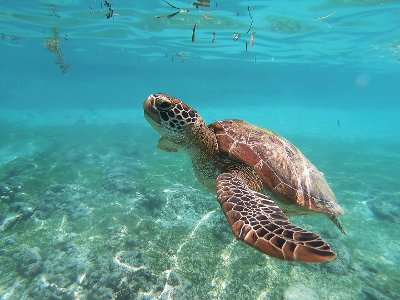
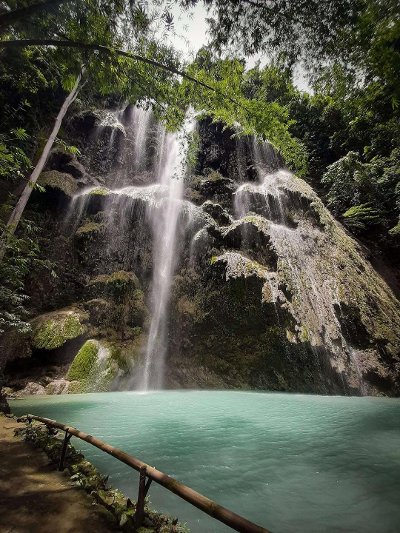
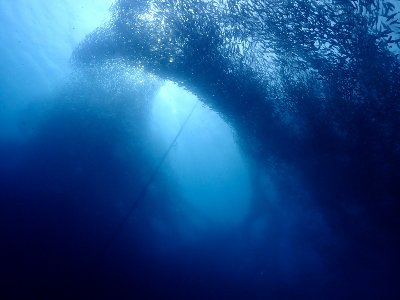
Badian and Alegria hold the canyoneering and the waterfalls. Moalboal has the sardine run and a reef wall a few strokes from shore. Oslob, around on the southeast coast, has the whale sharks. None of it is close to anything else, which is why the south repays a loop of two or three days rather than a series of day trips out and back.

Further reading Southern Cebu Itinerary: A 2 to 3 Day Loop How to loop southern Cebu in 2 to 3 days: Moalboal, Kawasan Falls and canyoneering, the Oslob whale sharks, and the coastal drive that links them. Read Further reading 5 Days in Cebu: An Itinerary With the South Coast A 5-day Cebu itinerary: two days around the city and Mactan, then two nights on the south coast for Moalboal, Kawasan Falls, and Oslob. Read

Chapter 04

Northern Cebu

Long sand, small towns, and the port where boats leave for Malapascua.

Two children wading in gentle sea waves at Suba Beach.

North of the city the coastal road runs three to four hours up to Daanbantayan and the port at Maya, where boats cross to Malapascua. What the north gives back for that drive is space — long white sand beaches without a resort strip behind them, small coastal towns, and a pace that has not been arranged around visitors.

It is an overnight trip rather than a day out. By the time you arrive the light is going, and most people who make the journey end up staying two or three nights rather than one.

Further reading Getting Around Cebu: Buses, Vans, and Car Hire How to get around Cebu: ride-hailing in the city, the North and South bus terminals, vans, hiring a car with a driver, and ferries to the islands. Read

Chapter 05

Bantayan Island

Half a day of travel, and some of the shallowest water in the Visayas.

Wooden beach loungers sitting on the white sand beach of Anika Island Resort in Bantayan, facing clear turquoise ocean waters under a sunny blue sky with soft white clouds.

Bantayan is half a day from Cebu City — a bus north to Hagnaya, then a ferry across — and the island makes no attempt to pretend otherwise.

What waits is some of the widest, whitest, shallowest sand in the Visayas, water you can wade a long way into before it reaches your waist, and an island that stays unhurried even in high season. A day trip spends more time in transit than on the beach, so plan to stay over. Most of the deciding you will do is which stretch of sand to spend the afternoon on.

Further reading Cebu Island Hopping: Where to Go and How It Works Cebu island hopping explained: which islands are worth it, where boats leave from, what tours cost, and when crossings get cancelled. Read

Chapter 06

Camotes Islands

Quieter than anywhere else you can still drive to a ferry for.

A scenic interior view of Bukilat Cave in Camotes Islands, featuring natural sunlight beaming through a large roof opening onto a clear, turquoise pool surrounded by rock formations and hanging stalactites.

East of the mainland and reached by ferry from Danao or Cebu City, the Camotes are quieter than anywhere else in the province with a boat running to it. The islands hold white sand beaches, a freshwater lake, and caves cut into the limestone, none of it developed to the degree Mactan or Bantayan have been.

There is not a great deal to do, which is broadly the point. The group repays wandering more than it repays a checklist.

Further reading Best Time to Visit Cebu, Month by Month The best time to visit Cebu: dry and wet season, month-by-month weather, peak weeks to avoid, and when the sea is calmest. Read

Frequently asked questions

What are the best places to visit in Cebu?

It depends on the trip. For a first visit most people combine Cebu City's heritage district, a beach day on Mactan, and one southern day trip — canyoneering to Kawasan Falls, the sardine run at Moalboal, or the whale sharks at Oslob. With more time, Bantayan Island and Malapascua in the north are the island escapes worth the extra travel. Every place listed here is on the map above.

How many days do you need in Cebu?

Three days covers the city, Mactan, and one southern day trip at a comfortable pace. Five to seven days lets you add an overnight in the south — Moalboal or Badian — and either the north coast or an island. Under three days, stay close to the city and Mactan; the good stuff further out is two to four hours of driving each way.

What is the best time to visit Cebu?

The dry season from roughly March to May brings the calmest seas, clearest water, and the most reliable boat crossings, which matters for island trips and diving. December to February is cooler and still good for swimming. June to November is the wet season, with cheaper rates but a real chance of rain and cancelled crossings. Holy Week and Sinulog in January are the busiest weeks of the year.

How do you get around Cebu?

Ride-hailing apps and taxis work well inside Cebu City and Mactan. For anywhere further out, the North and South Bus Terminals in Cebu City serve the whole island, and many visitors hire a car with a driver for day trips because the distances are long and the connections between rural spots are slow. Islands are reached by ferry from Hagnaya, Maya, or Danao depending on the destination.

Is Cebu better than Boracay or Palawan?

They are different trips. Boracay is one beach done extremely well, and Palawan is built around its seascapes and island hopping. Cebu's advantage is range and access — a major international airport, a real city with history and food, beaches, mountains, waterfalls, and diving all reachable from one base. It suits travellers who want variety more than a single resort strip.

What food is Cebu known for?

Lechon above all — Cebu's roast pig is widely considered the best in the Philippines and is worth planning a meal around. Beyond that, grilled seafood cooked to order, sutukil in the coastal towns, dried mangoes, and a specialty coffee scene in Cebu City and IT Park that has grown quickly in recent years.

Is Cebu an island, a city, or a province?

All three, which is why one search for Cebu turns up such different results. Cebu Island is a long, narrow island in the Visayas, in the central Philippines. Cebu Province covers that island plus Mactan, Bantayan, the Camotes and several smaller islands. Cebu City is the provincial capital, on the island's east coast, and it is where most visitors fly into and base themselves. Everywhere on this map is somewhere in Cebu Province.